About Me
Ivan Ermolaev
CTO & Co-Founder at Meridyan - Techstars '26
A small, honest aside: I've loved Lovecraft for as long as I can remember. Cosmic horror and distributed systems agree on one thing - the more you learn, the more you realize how much is happening just past what you can see.

Now
I'm the CTO and co-founder of Meridyan, where we're building bank and blockchain infrastructure for people around the world who don't fit neatly inside a traditional bank. We're currently going through Techstars for it. Before this, I spent more than a decade building complex, mission-critical systems in fintech, telecom, and aviation. This is the first thing I've built that's fully mine - and I'm genuinely curious what's next.
Career
Scientific Computing - Sheep Genetics, 2014–2015
My first real job put me in a room with a scientist studying sheep breeding, sitting on an ocean of DNA sequences, field trials, and lab results - all locked inside Oracle. Oracle capped queries at 64kb and ran them in a tightly bounded memory space, which made the kind of massive, cross-referenced selective query the science actually needed nearly impossible. So I built a SQL engine on top of Oracle to remove those limits - parsing with ANTLR, heavy concurrent processing in Java - giving the scientists the full power of SQL without the fence around it. That engine was patented and is still used today, mostly in Australia. Not a bad place to start.
Sirena Travel, 2015–2016
Next came Sirena Travel and their GDS - the reservation system behind a lot of airline ticketing. I worked on fares and their integration with payment systems, and on the closely related problem of clearing integrations. Java, SOAP, Spring - unglamorous plumbing, but the kind airlines actually run on.
Megafon / Megalabs, 2016–2017
From there I moved to Megalabs, the technology arm of Megafon, one of Russia's largest telecoms. I worked on high-load systems built on Cassandra, serving more than 60 million people across one of the largest countries on earth. These were early days for Docker in production - we ran our services in containers, orchestrated with Docker Swarm, before that was the obvious choice it is now.
BCS (Broker Credit Service), 2017–2019
At BCS, a major Russian brokerage, I connected NYSE, NASDAQ, LSE, and other exchanges to brokerage services in Russia, working closely with securities, financial instruments, and Bloomberg systems. We built a distributed stock order processing system in Java from the ground up, on our own Kubernetes infrastructure - our own cloud, isolated and hardened the way a financial exchange needs it to be.
Ex Machina, Amsterdam, 2019–2020
In Amsterdam, I joined Ex Machina, building live quiz and voting infrastructure for shows like America's Got Talent, The Voice, and live Twitch broadcasts. This was high load with a strange shape: calm for most of the show, then a spike of millions of requests the instant a host asked the audience to do something - with a hard requirement to respond in under 20 milliseconds, spread across AWS and multiple clouds for resilience. Nothing teaches you about scale like a system that has to survive a studio audience acting all at once.
ABN AMRO, 2020–2026
At ABN AMRO, I worked on KYC, payment systems, and cryptography, integrating with Open Banking and building out security architecture across the bank. I worked closely with identity providers - Microsoft Entra ID, Auth0 - and was deeply involved in the cybersecurity design decisions sitting underneath a bank that millions of people trust without ever thinking about it.
Independent Projects
Alongside the day jobs, I've spent most of my life building things nobody asked me to build.
Macrofate, 2013–2014
While still in college, I built my own game engine from scratch and called it Macrofate. I designed every piece myself - SFML for rendering, Box2D for physics, a custom NoSQL engine to store game data - the full architecture, written entirely in C++. On top of it, I built a game, also called Macrofate: a spaceship survival simulator inspired by FTL.
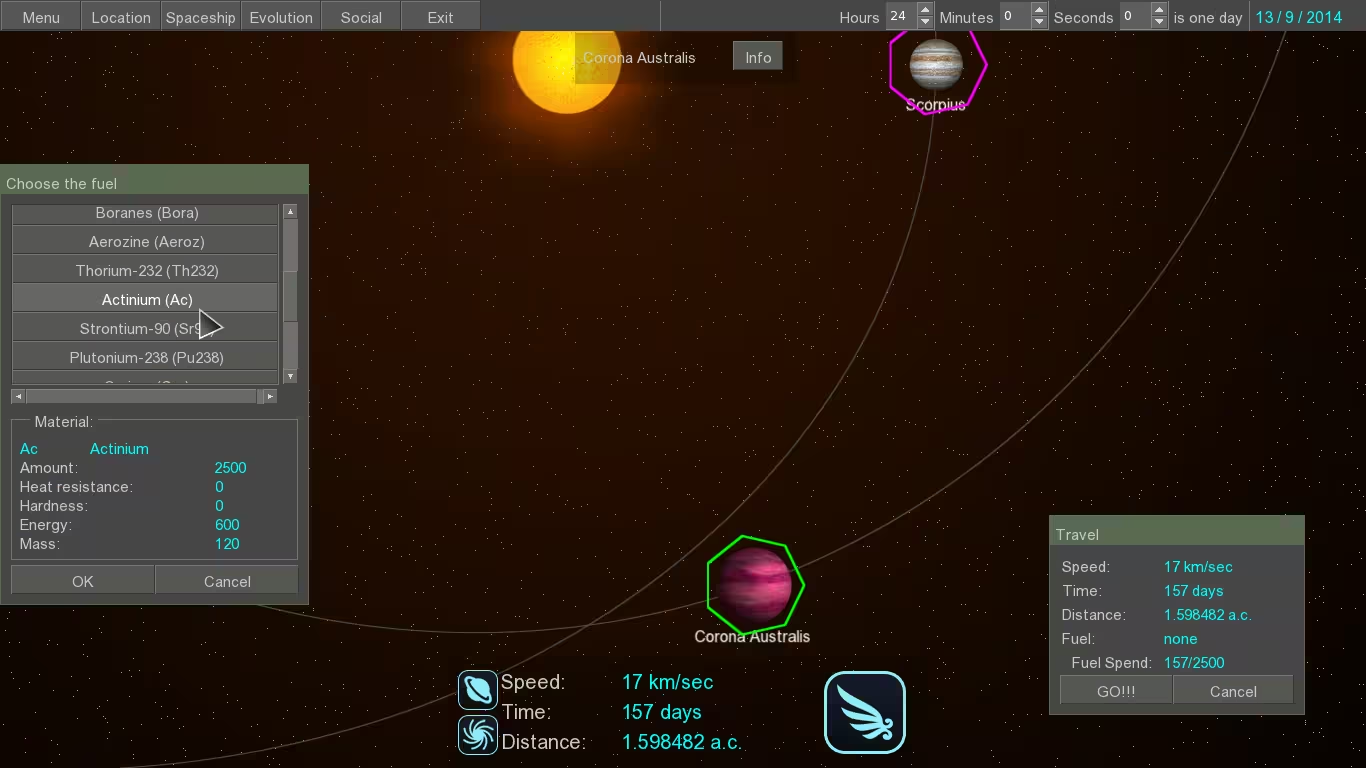
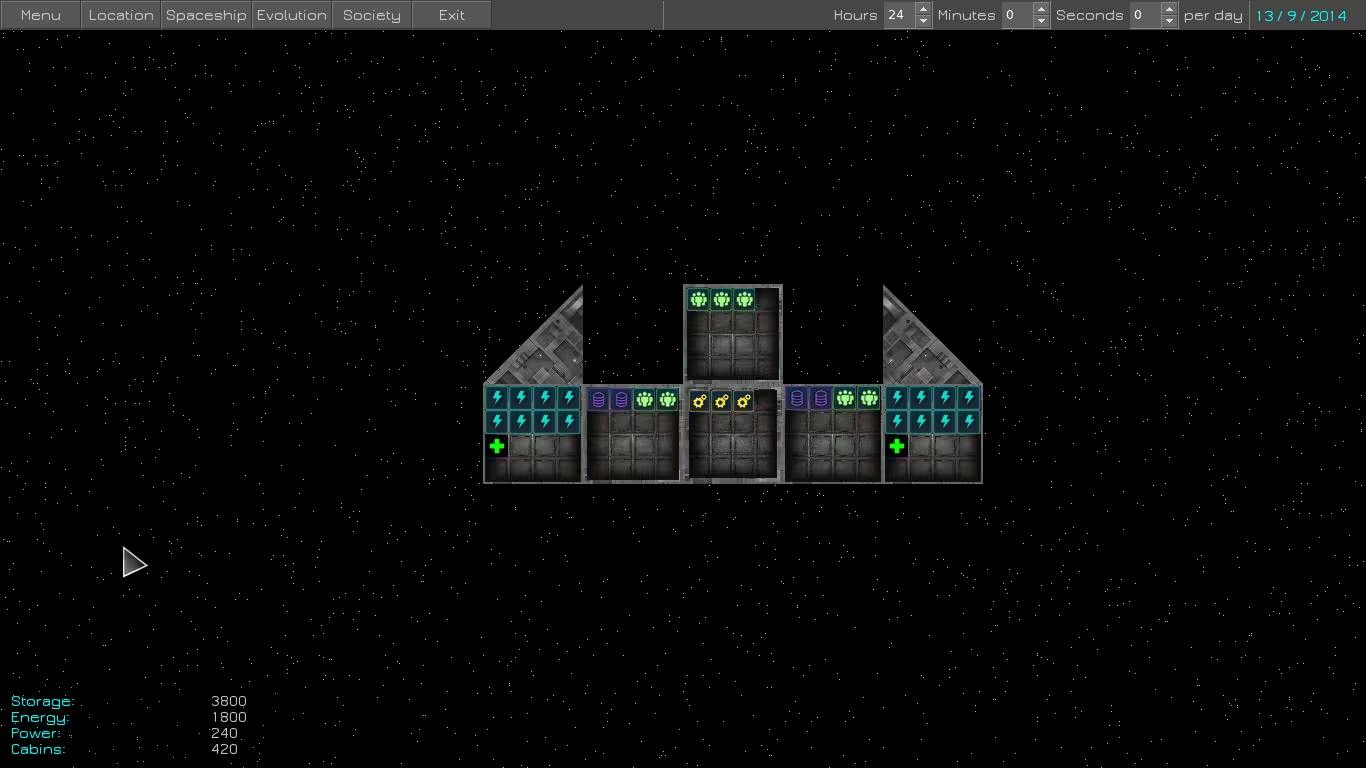
Find it on itch.io and IndieDB .
Finding My People, 2014–2015
That same drive pushed me further. A friend and I were working on a game, and I realized we needed people we didn't know yet - audio producers, other programmers, talent scattered across the world. At 16, I started searching Facebook for professionals abroad and put together my first international team, to build a horror game together.
Find the game's page on IndieDB.
Skeletal Animation Engine
Around the same time, I went deep into animation systems and built my own skeletal animation engine - again in C++, with Qt for the interface.
Read the full story (In Russian)
Mental Shift, 2020–2022
Years later, I chased a different kind of project: an online game called Mental Shift, built with ten people across design, programming, and music - all volunteers, all in the evenings, for the love of it. I found the team and built the way we worked together: dailies, Jira boards, epics, sprint demos we played together online at the end of each cycle. I brought in a consultant who had worked on AAA titles for Sony and Xbox.
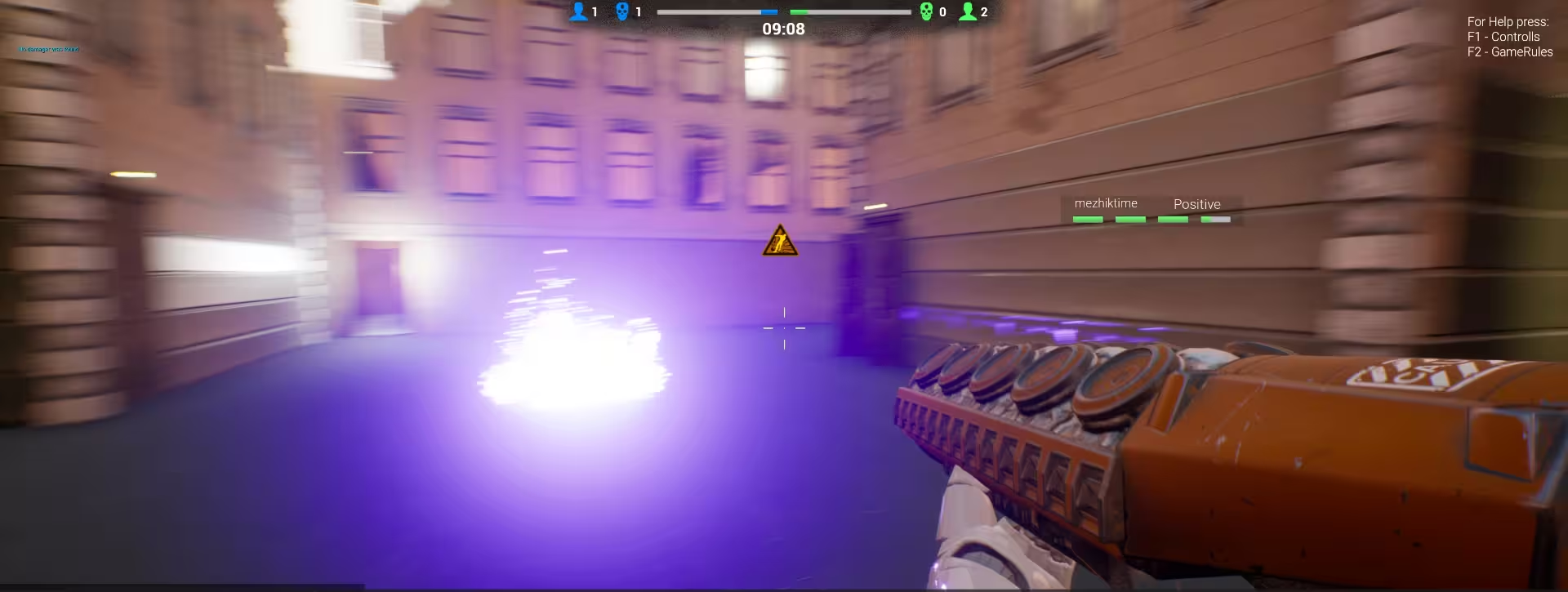
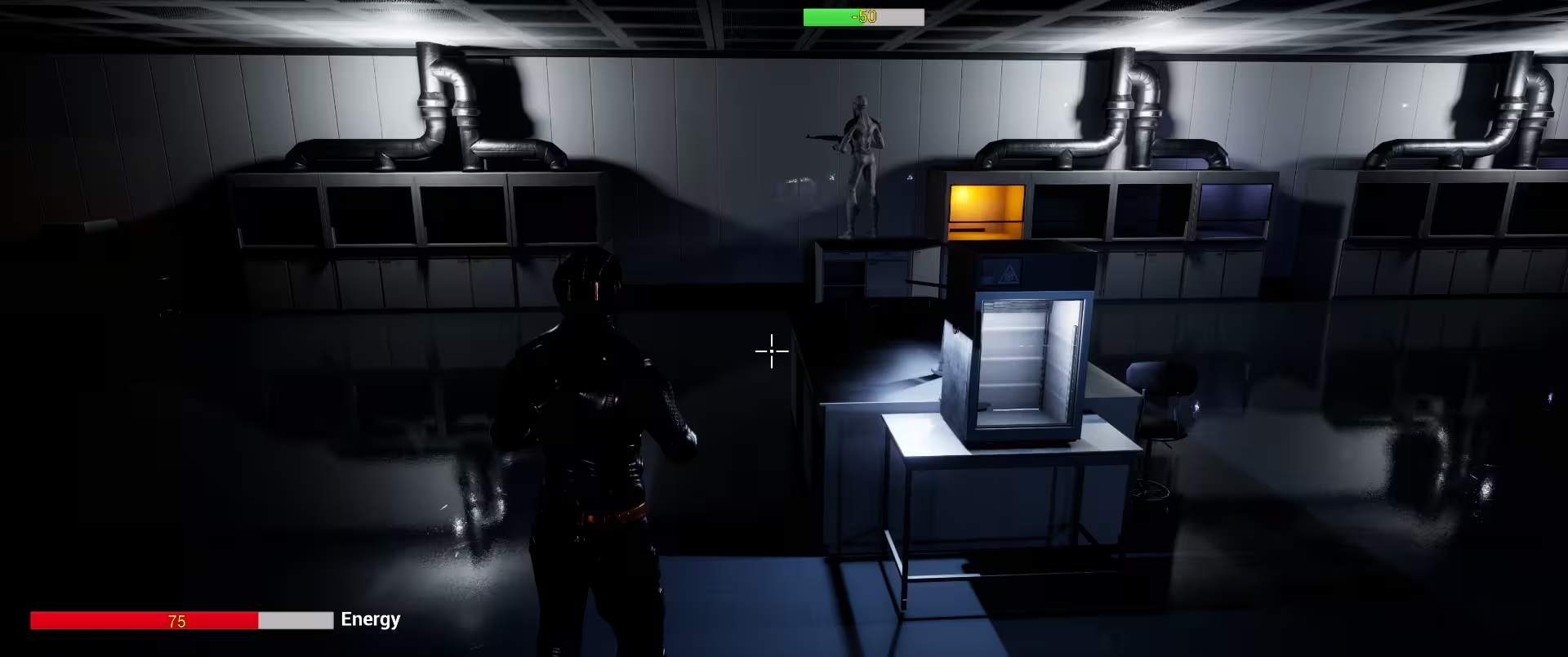
The post-COVID funding climate of 2021 made it impossible to close a deal with a publisher to bring the game to market - but everything I learned building and running that team stayed with me.
Versolid, 2022–2024
Game studios don't use Git - they use Subversion or Perforce, and Perforce gave our team constant trouble. So I built our own version control system in C#: fast, indexed, handling binary file locks, syncing efficiently across a small team. We called the workflow model "light branch" - a bounded work area, scoped by folders, where one developer's changes stay isolated until ready. I later rewrote the whole thing in Rust, and with a team of five we built a full MVP - server, client, and a UI for designers.
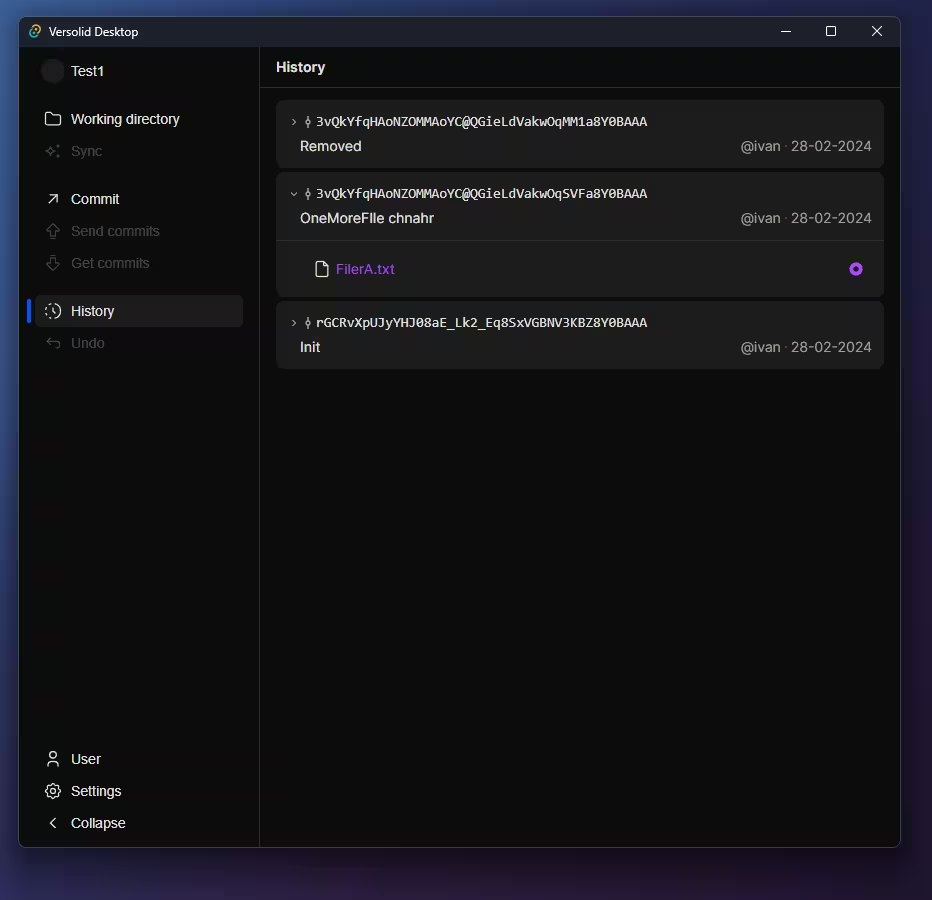
We called it Versolid - version, done solidly. Programmers and artists who tried it loved it, and we piloted it with a few indie teams. But indie studios run on thin margins, and when I pitched it to engineers at Ubisoft, Guerrilla Games, Funcom, and Bohemia Interactive, I learned something more useful than a sale: even when people love a technology, large studios are bound tightly to their existing infrastructure, and internal incentives often work against adopting something new, no matter how good it is. That's when I read The Innovator's Dilemma and The Innovator's Solution, and later Crossing the Chasm - and started to understand why.
What I Took From It
Versolid taught me I had the engineering and architectural skills to build almost anything - but not yet the skills to build a business around it. So I went back to school on that, properly: Alex Osterwalder's Business Model Generation, Value Proposition Design, and Testing Business Models, and Steve Blank's The Startup Owner's Manual. That reading, and the scars from Versolid, are a big part of what got me into Techstars.
Follow Along
Thanks for reading this far. If you want to keep up with what I'm building, find me on YouTube or LinkedIn.